Running Shorts Inseam Lengths Decoded: What 3, 5, and 7 Inches Actually Change
Quick Answer: Inseam is the spec that matters most in running shorts: 3” maximizes stride freedom and cooling but demands anti-chafe strategy and confidence; 5” is the do-everything default balancing coverage and freedom; 7”+ adds thigh coverage and chafe protection at some stride-feel cost. The matching rule: shorter for faster and hotter, longer for thigh-rub-prone and gym-crossover use — and the fit at the leg opening matters as much as the length itself.
Running shorts get bought by the color and the waistband while the number that decides everything — how they move, ride up, cool, and chafe — sits quietly in the product description: the inseam. Two identical-looking shorts at 3 and 7 inches are different equipment.

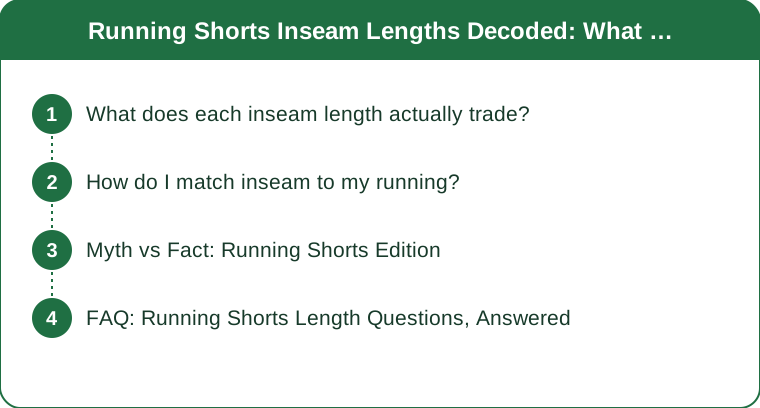
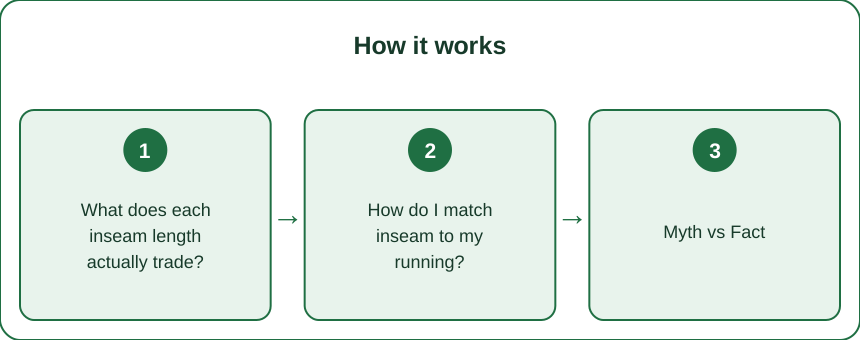
What does each inseam length actually trade?
3” (and split shorts): the racing end — maximal stride clearance (zero fabric interference at full extension), maximal airflow, minimal weight. The costs: inner-thigh skin is on its own (chafe strategy required for most bodies), and the coverage suits running better than the pre-run coffee stop. Racing and hot-day speedwork territory.
5”: the default for a reason — enough length to cover most riding-up, enough freedom for real speed, presentable everywhere. If you own one pair, this is the length; if 5” shorts still ride up, the culprit is usually the leg-opening cut or size, not the inseam.
7”+: the coverage end — thigh protection (both from sun and from thigh-on-thigh friction), gym-and-errands crossover, and the preferred feel for many runners who simply like fabric where fabric usually isn’t. Costs: slightly more fabric awareness at full stride, more warmth in summer, and on some cuts, flapping at pace.
The liner variable that crosses all lengths: lined shorts add built-in briefs (convenience, one less decision) — and liner quality decides more comfort than the shell ever will; unlined shorts hand you the choice of underwear, which chafe-prone runners often prefer to control. The 2-in-1 style (fitted inner + loose shell) is effectively a different category: compression-short benefits with shorts appearance — the anti-ride-up answer for many.
How do I match inseam to my running?
Match by run type:
- Race day and speedwork: shortest you’re comfortable in — stride freedom compounds at pace.
- Daily training: 5” (or 2-in-1) — the no-thought default.
- Long runs: whatever your chafe history votes for — long runs are where inner-thigh friction compounds from ‘noticeable’ to ‘shower-screaming.’
- Treadmill and gym-mixed days: 5-7” for the crossover.
Match by body and priorities, honestly:
- Thighs that touch (most humans): either long enough to keep fabric between them (7” or 2-in-1), or short + anti-chafe balm as a system. The in-between lengths that almost reach the friction zone can be the worst of both — riding up to exactly where they’re needed least.
- Hot-climate runners: shorter + balm generally beats longer + heat.
- Ride-up-prone builds: the leg opening spec — wider openings and side splits ride up less than tapered ones; 2-in-1s solve it structurally.
The try-on protocol (do this in the fitting room, shamelessly): 10 exaggerated high-knee strides, 5 deep lunges, and a 20-second in-place jog — ride-up, liner comfort, and waistband behavior all reveal themselves in under a minute. Shorts that pass the silly-looking fitting-room test pass the 10k.

Myth vs Fact: Running Shorts Edition
Myth: Shorter shorts are for fast runners only. Fact: The 3” inseam is a mechanical choice (freedom, cooling), not a pace credential — beginners in hot climates arguably benefit most. The start line has every length at every speed; wear the one that disappears from your awareness.
Myth: Ride-up means the shorts are too small. Fact: Ride-up is mostly cut — tapered leg openings and certain fabrics climb regardless of size (sometimes bigger sizes ride worse: more loose fabric to migrate). The fixes are cut-based: wider openings, splits, or the 2-in-1 architecture.
Myth: Compression shorts are the chafe answer for everyone. Fact: They solve thigh-on-thigh completely — and introduce their own considerations (heat, leg-opening band pressure, the rolling-hem problem on some thighs). They’re one excellent answer; balm-plus-short-inseam and the 2-in-1 are the others. Chafe management is a menu, not a monopoly.
The quiet spec nobody reads: the rise (waistband height) — high-rise shorts changed the game for runners who found waistbands folding or digging on the run, and it never appears in the length debate at all.
FAQ: Running Shorts Length Questions, Answered
What length hides the least flattering and rides least?
The honest pairing: 5” with a wider leg opening, or a 2-in-1 — both stay put through a long run and read as intentional anywhere. The ‘almost-mid-thigh’ lengths are the ride-up champions to avoid if migration drives you crazy.
Do I need different lengths for different seasons?
It’s the cheapest legitimate shorts-drawer structure: 3-4” for the hottest months, 5” defaults year-round, and the 7”/2-in-1 for cooler days and gym crossover. Three pairs, full coverage of the year’s use cases.
How should the liner fit if the shorts have one?
Snug without pressure lines, seams flat against skin (the liner seam placement is the classic hidden chafe source), and drying fast — walk-test in the fitting room with attention on the liner specifically. A great shell with a bad liner is a bad short; runners cut liners out of otherwise-loved shorts for exactly this reason. This is general information, not medical advice.
TL;DR:
- Inseam is the deciding spec: 3” = freedom + cooling (chafe strategy required), 5” = the default, 7”+/2-in-1 = coverage + anti-ride-up
- Match shorter to faster/hotter, longer to friction-prone and crossover use; the leg opening and rise decide as much as length
- Fitting-room protocol: high knees, lunges, 20-second jog — one silly minute predicts the whole 10k
- Chafe answers are a menu: length, balm, compression, 2-in-1 — pick the system, not the dogma
The color was never the spec — the number in the product description was, and now you can read it. This is general information, not medical advice.
Keep Reading
This article is for general informational and styling purposes only. Fit, sizing, and product availability may vary.