Why Anti-Chafe Running Shorts Can Still Chafe in the Exact Spot They're Designed to Protect
Shorts marketed specifically for chafe protection can still rub raw in the exact inner-thigh spot they’re supposed to guard, and the reason usually isn’t a failed liner — it’s that the seam sitting flat and comfortable while standing in a fitting room shifts into a completely different position once the legs are actually swinging through a stride.

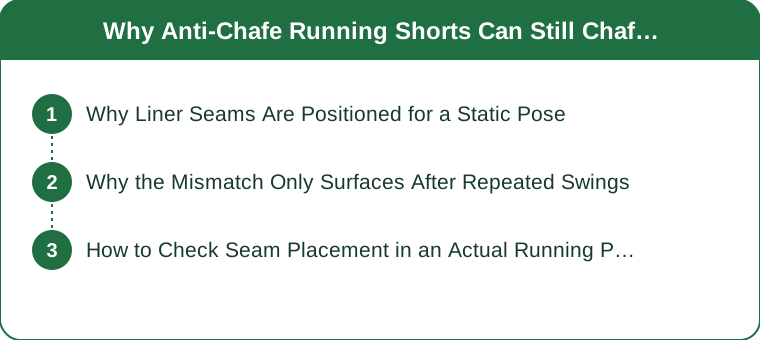
Why Liner Seams Are Positioned for a Static Pose
The design: liner-seams-are-placed-and-tested-primarily-with-the-body-standing-still-in-a-neutral-position-not-with-the-legs-actively-swinging-through-a-running-stride (liner seams being placed and tested primarily with the body standing still in a neutral fitting-room position, not with the legs actively swinging back and forth through a genuine running stride, per the running-shorts-fit-and-comfort-guide logic — liner-seams-being-placed-and-tested-primarily-with-the-body-standing-still-in-a-neutral-fitting-room-position-not-with-the-legs-actively-swinging-through-a-genuine-running-stride), and the reframe (a seam’s comfortable resting position not describing its position in motion)).

Why the Mismatch Only Surfaces After Repeated Swings
The delay: a-slightly-misplaced-seam-produces-no-noticeable-friction-in-the-first-few-strides-and-only-becomes-a-hot-spot-after-hundreds-of-repeated-inner-thigh-contacts (a slightly misplaced seam producing no noticeable friction at all in the first few strides of a run, and only becoming an actual hot spot after hundreds of repeated inner-thigh contacts accumulate over several miles, per the anti-chafe-shorts-guide logic — a-slightly-misplaced-seam-producing-no-noticeable-friction-in-the-first-few-strides-and-only-becoming-an-actual-hot-spot-after-hundreds-of-repeated-inner-thigh-contacts-accumulate-over-several-miles), and the frame (a flaw invisible at low repetition becoming obvious only at running volume)).
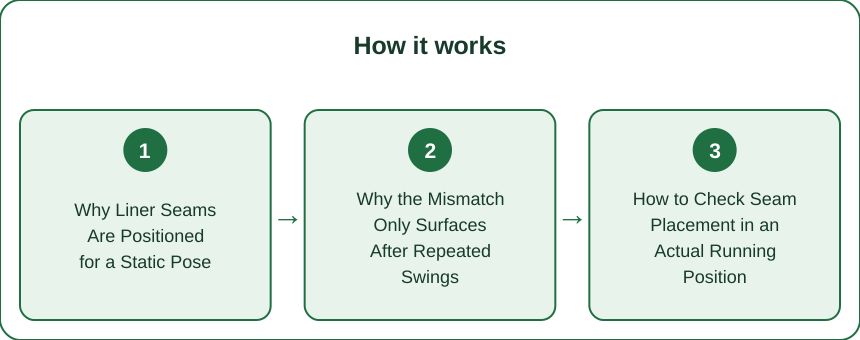
How to Check Seam Placement in an Actual Running Position
The check: raise-one-knee-toward-the-chest-and-swing-the-leg-through-a-mock-stride-while-trying-on-shorts-to-see-where-the-liner-seam-actually-lands-in-motion (raising one knee toward the chest and swinging the leg through a mock running stride while still in the fitting room, specifically to see where the liner seam actually lands once the leg is in motion rather than at rest, per the-liner-seam-placement-chafe-guide logic — raising-one-knee-toward-the-chest-and-swinging-the-leg-through-a-mock-running-stride-while-still-in-the-fitting-room-to-see-where-the-liner-seam-actually-lands-once-the-leg-is-in-motion), and the frame (testing the garment in the position it will actually be worn in, not the position it’s sold in)).
Liner seams are placed and tested primarily with the body standing still in a neutral position, not with the legs actively swinging through a genuine running stride, which is why a slightly misplaced seam produces no friction at all for the first few strides and only turns into a hot spot after hundreds of repeated contacts accumulate over several miles. Swinging one leg through a mock stride while still trying shorts on shows where that seam actually lands in motion, testing the garment in the position it’s actually worn rather than the position it’s sold in.
Keep Reading
This article is for general informational and styling purposes only. Fit, sizing, and product availability may vary.