Why Running Shorts Feel Fine in the Store Mirror and Ride Up Mid-Run
Quick Answer: Running shorts that look and feel great standing still often ride up mid-run because the repetitive thigh movement and sweat both change how the fabric behaves over time — a static mirror check can’t reveal fit issues that only emerge after sustained motion and moisture, which is why an in-store or at-home movement test matters more than the standing fit.
The mirror isn’t lying, it’s just testing the wrong thing.

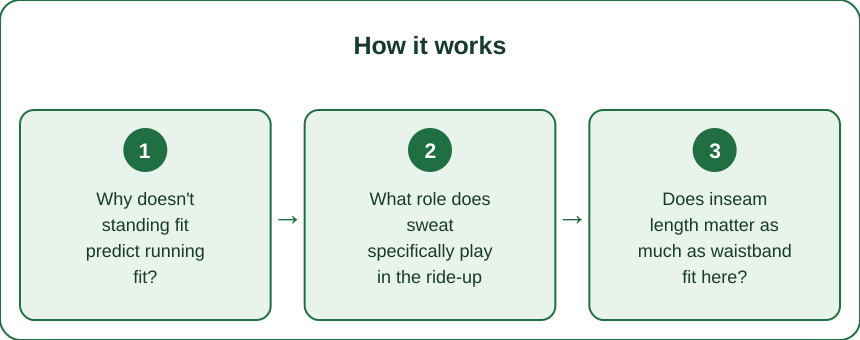
Why doesn’t standing fit predict running fit?
Standing still, the fabric sits at rest with no repeated friction or sweat buildup. The specific combination of repetitive thigh-to-thigh or thigh-to-fabric friction over thousands of strides, plus sweat changing fabric grip, only shows up during actual sustained movement — which a 10-second mirror check simply doesn’t simulate.
What role does sweat specifically play in the ride-up problem?
Dry fabric often grips skin fairly well at rest. Once sweat is introduced, some fabrics lose grip and start sliding rather than staying put, which is why shorts that feel secure for the first ten minutes can start riding up specifically once sweat builds up, not from the start.
Does inseam length matter as much as waistband fit here?
Both matter, but for different reasons — waistband fit affects whether the shorts stay at the right height overall, while inseam and leg opening design affect whether the fabric bunches or rides at the upper thigh during the stride’s repetitive motion. A shorts pair can have a great waistband and still ride up from a leg-opening issue, or vice versa.
What’s an actual useful test before committing to a pair?
Doing high knees, a few in-place strides, or jumping jacks in the fitting room — genuine repetitive motion, not just walking a few steps — reveals far more than a standing mirror check. For online purchases, doing the same test at home before removing tags is the closest substitute.
FAQ: Running Shorts Fit Questions, Answered
Does a compression liner help prevent this kind of ride-up?
Often yes — a built-in compression liner adds friction against the skin that can reduce sliding, though liner-specific ride-up is its own separate issue some runners encounter.
Should shorts feel snug or loose at the leg opening to avoid this?
A snug, not tight, leg opening tends to resist ride-up better than a loose one, since a loose opening has more room to shift during motion.
Is this more common with certain fabric types?
Yes — fabrics with lower moisture-wicking performance tend to get slippery faster once sweat builds up, making ride-up more likely than with high-performance wicking fabric.
TL;DR:
- A standing mirror check can’t reveal how fabric behaves under repetitive motion and sweat
- Sweat changes fabric grip on skin, which is often when ride-up actually starts, not from the first minute
- Both waistband fit and leg-opening design independently affect ride-up risk
- Testing genuine repetitive motion in the fitting room (or at home) catches problems a standing check misses
Next time shorts pass the mirror test, add thirty seconds of high knees before deciding — that’s closer to what forty minutes of running will actually reveal.
Keep Reading
This article is for general informational and styling purposes only. Fit, sizing, and product availability may vary.