Why Running Shorts With a Built-In Liner Still Leave Some Runners Wanting to Wear Underwear Underneath
Quick Answer: A built-in liner is designed to sit close against the body and move with it, but liner shape, rise, and compression level vary significantly between brands, and a liner that doesn’t match an individual runner’s body shape or preferred fit can shift, ride, or feel exposed during motion — in those cases, adding underwear isn’t a failure of the liner concept, it’s a sign that specific liner just isn’t the right fit for that runner’s body.
The liner concept works well when the fit matches the body wearing it; when it doesn’t, extra layering is a reasonable practical fix rather than doing something wrong.

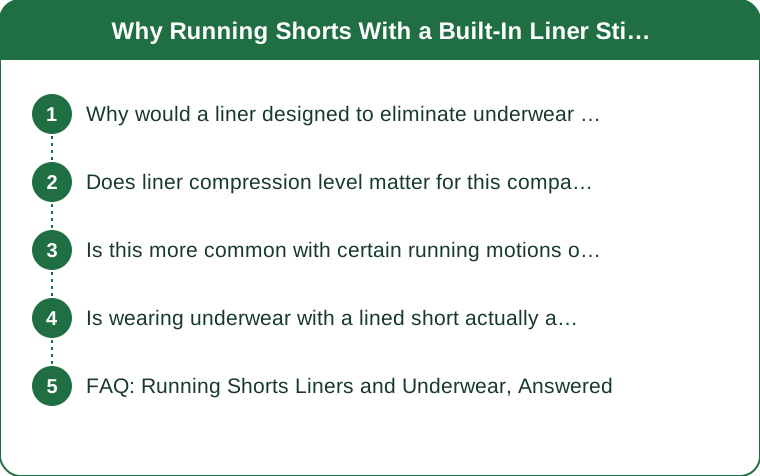
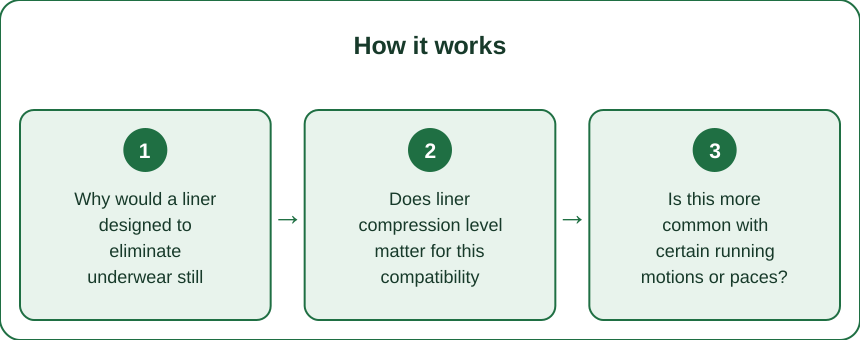
Why would a liner designed to eliminate underwear still feel incomplete for some runners?
Liner shape and rise are designed around an average body template, and runners whose proportions differ meaningfully from that template can experience gapping, shifting, or reduced coverage that the liner wasn’t specifically designed to prevent.
Does liner compression level matter for this compatibility issue?
Yes — a lower-compression liner offers less resistance to movement-related shifting than a snugger, higher-compression liner, meaning the same running motion can affect liner stability differently depending on that specific liner’s compression design.

Is this more common with certain running motions or paces?
Faster paces and more dynamic hip movement increase the forces a liner has to resist to stay in place, so compatibility issues that aren’t noticeable during an easy jog can become apparent during faster running.
Is wearing underwear with a lined short actually a problem, practically speaking?
Not inherently — many runners do this successfully, though it can add seams and fabric that increase chafing risk, so if going this route, choosing seamless, moisture-wicking underwear reduces that added risk compared to regular cotton underwear.
FAQ: Running Shorts Liners and Underwear, Answered
How can I tell if a liner just doesn’t fit my body before buying?
Checking liner rise, coverage area, and compression level against your own comfort preferences, and reading fit-specific reviews, helps predict compatibility better than assuming all liners fit similarly.
Are there liner-free running shorts as an alternative for people who have this issue consistently?
Yes — running shorts without a built-in liner, worn with separately chosen underwear or compression shorts, are a legitimate and common alternative for runners who find liners consistently don’t fit them well.
Does liner fabric type affect this compatibility issue too?
Yes — liner fabric stretch and moisture-wicking properties affect how well it stays in place and how comfortable it feels against skin, adding to fit and compression as relevant compatibility factors.
TL;DR:
- Liner shape and rise are designed around an average template that doesn’t fit every body
- Lower-compression liners resist movement-related shifting less than snugger designs
- Faster paces and dynamic hip movement expose compatibility issues more than easy running
- Wearing seamless underwear with a liner is a reasonable fix, not a sign of doing something wrong
Keep Reading
This article is for general informational and styling purposes only. Fit, sizing, and product availability may vary.