Why Your Running Shorts Feel Different on a Treadmill Than Outside
Quick Answer: Treadmill running produces more sweat than outdoor running at the same effort because there is no airflow moving across your skin. Wet fabric behaves completely differently — it grips instead of sliding, it gets heavier and drops, and its seams stiffen. Add the treadmill’s slightly shortened, more repetitive stride, and shorts that never chafed outdoors will chafe indoors within a few miles.
You have run in these shorts fifty times. Then you do an indoor session because of weather or schedule, and by mile three the liner has ridden up, the waistband is annoying you, and there is a hot spot on your inner thigh that has never existed before.
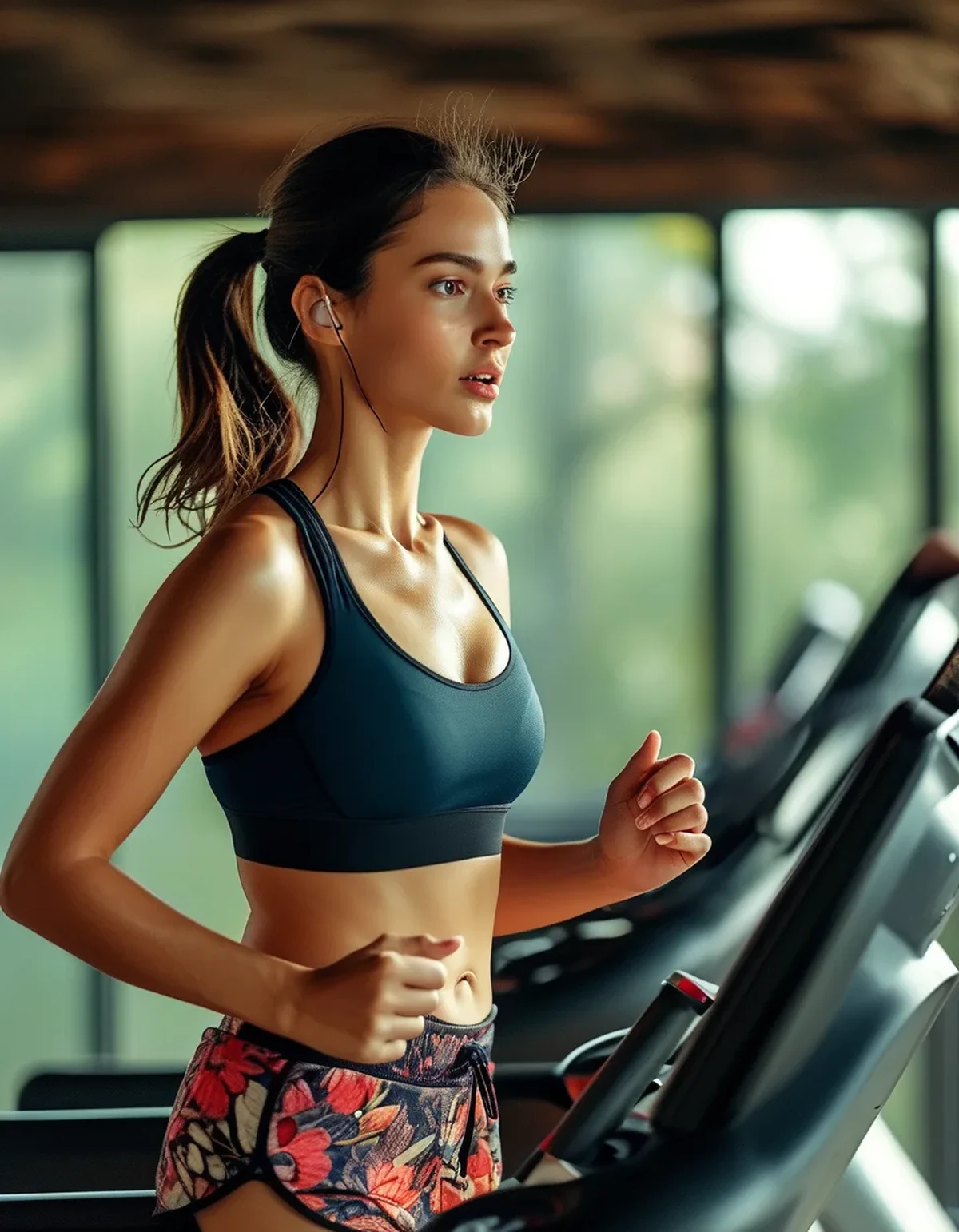
Why do you sweat so much more indoors?
Because outdoor running comes with a fan attached and treadmill running does not.
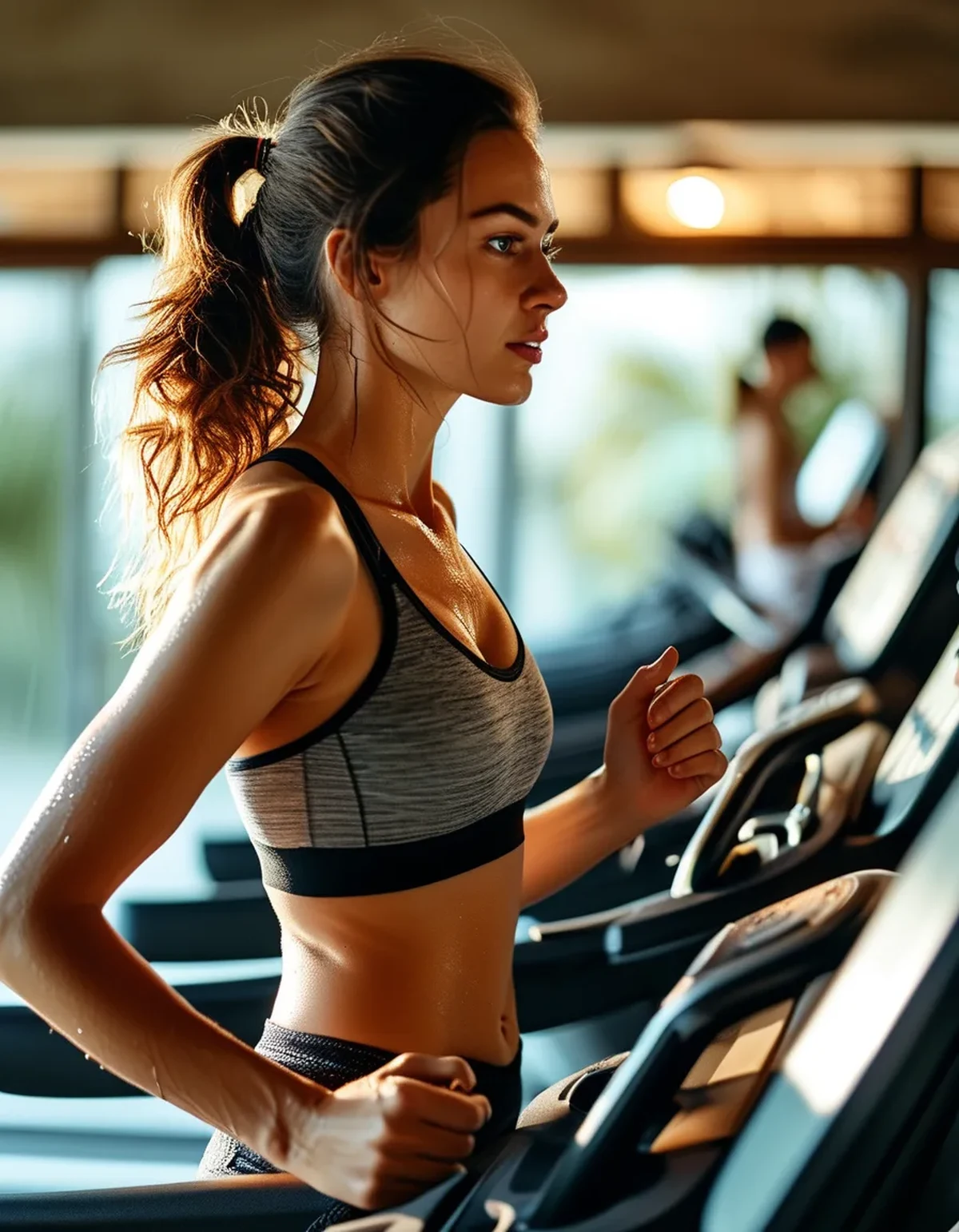
When you run outside at eight-minute-mile pace, you are also moving through air at roughly 7.5 miles per hour. That relative airflow strips heat and moisture off your skin continuously, and it is a substantial cooling effect. On a treadmill, you are stationary relative to the air, so all of that cooling disappears.
The practical consequence: the same effort produces noticeably more accumulated sweat indoors, and it stays on your skin and in your fabric rather than evaporating away. Even a decent fan does not fully replace it, because a fan hits you from one direction while running outdoors moves air across your entire front surface.
There is a secondary effect people underestimate. Indoor air is generally more humid than outdoor air in the same building, particularly in a home gym or a basement, and particularly if you are the source of the moisture. Higher humidity further slows evaporation, compounding the first problem.
So the shorts are not behaving differently because of the treadmill. They are behaving differently because they are wetter than they have ever been in outdoor use, and wet fabric is functionally a different material.
What does wet fabric actually do differently?
Four things, and each one maps to a specific complaint.
It grips instead of sliding. Dry technical fabric moving against skin has a low friction coefficient — it slides, which is the entire mechanism by which it prevents chafing. Wet fabric grips, so instead of the fabric sliding over your skin, your skin moves against fabric that is staying put. That is chafing, mechanically.
It gets heavier and drops. A saturated liner and waistband weigh meaningfully more than a dry one. The waistband drifts down, the liner sags, and the shorts sit lower than they were designed to. This is the ride-up and the waistband-roll complaint, and it is a weight problem rather than a sizing one.
Seams stiffen. A flatlock seam that is invisible when dry becomes a defined ridge when saturated, because the thread and the folded fabric swell slightly and lose flexibility. This is why a hot spot appears exactly on a seam you never noticed.
It stops breathing. Saturated fabric has no air passages left, so the moisture-wicking property that the shorts are sold on stops functioning entirely. Once fully wet, a technical short and a cotton one behave more similarly than the price difference suggests.
How does the treadmill stride make it worse?
Two ways, both small individually and additive over an hour.
The stride is slightly shorter and the cadence slightly higher on a treadmill for most people at the same pace, because the belt is moving underneath you and there is no need to propel yourself forward through space in the same way. A shorter, faster stride means more repetitions of the same rubbing motion per mile.
The stride is far more uniform. Outdoors, every step is slightly different — camber, surface texture, small direction changes, a curb, a turn. That variation distributes the friction across a slightly different patch of skin each time. A treadmill removes the variation entirely, so the same square centimeter of skin gets the same rub thousands of times consecutively.
That uniformity is the underrated factor. Chafing is not really about total friction; it is about repeated friction in one location. A treadmill is a machine for producing perfectly repeatable movement, which is excellent for pacing and unhelpful for skin.
Small mitigations that work: vary the incline every few minutes, which changes your stride enough to move the contact point. Step off briefly at intervals. Neither is a full solution and both help more than they sound like they should.
5 Mistakes That Make Indoor Runs Chafe
1. Wearing your longest-run outdoor shorts indoors. The shorts that survive a two-hour outdoor run are optimized for a drier condition. Your indoor pair should be the one with the fewest seams in contact areas and the best-behaved liner, even if it is not your favorite outdoors.
2. Skipping the anti-chafe balm because you are only running indoors. Indoors is the harder condition for skin, not the easier one. If you use balm for a long outdoor run, use it for a medium indoor one.
3. Not running a fan. A fan does not fully replace outdoor airflow, but it makes a substantial difference to sweat accumulation. Position it in front of you rather than to the side, at roughly torso height.
4. Wearing the same shorts for consecutive indoor sessions without a proper wash. Salt residue from dried sweat stiffens fabric and makes it more abrasive. Rinsing is not washing — salt needs detergent and a full cycle to come out, and a short worn twice from a hamper is measurably rougher than a clean one.
5. Assuming a size up will fix it. Looser shorts move more, and more movement over wet skin is worse rather than better. The fix is a better liner, fewer seams, and less saturation — not more fabric.
What should you actually wear indoors?
Slightly different criteria than for outdoors, and it is worth having a dedicated pair.
- A shorter inseam than you would choose outdoors. Less fabric means less to saturate, and the highest-friction zone is the inner thigh where a longer inseam sits
- A compression liner rather than a loose boxer-style one. Compression liners stay in place when wet; loose liners are the ones that ride up and bunch, and they do it faster when heavy
- The flattest available seams, and specifically check the inner leg seam. Run a finger along it — anything you can feel dry will announce itself wet
- A wide, flat waistband with a drawcord you actually tie. The drawcord is what stops a saturated waistband from migrating downward
- Lighter-weight fabric. It saturates just as fast but carries less water, so the weight problem is smaller
Anti-chafe balm on the inner thighs and anywhere a seam sits. This is the single highest-return item on the list and it costs about ten seconds.
One broader point: if you are running indoors regularly through a hot late-summer stretch and then moving outdoors as the weather cools in the next few weeks, your outdoor kit will feel completely different when you go back to it — drier, lighter, better behaved. That is not the shorts improving. That is the airflow returning, and it is worth knowing so you do not conclude the indoor pair was defective.
FAQ: Treadmill Shorts Questions, Answered
Would tights actually be better than shorts indoors?
For chafing, often yes — full-length or capri tights eliminate skin-on-skin contact at the inner thigh entirely, which is the most common indoor chafe location. For heat, they are worse, since they cover more surface area in a condition where you are already struggling to shed heat. If chafing is your limiting factor rather than heat, tights solve it.
Why does it only happen on runs over about three miles?
Because saturation is progressive. For the first couple of miles the fabric is damp rather than wet, and damp fabric still slides reasonably well. The transition to fully saturated is where the friction behavior flips, and for most people at moderate effort indoors that lands somewhere in the twenty-five to thirty-five minute range.
Does a fan really make that much difference?
More than most people expect. It will not match running through air at race pace, but it meaningfully slows the rate of saturation, which pushes the friction transition later into your run. On a long indoor session, a good fan can be the difference between finishing comfortable and finishing with a hot spot.
TL;DR:
- Treadmill running removes the airflow that outdoor running provides, so you saturate your shorts far faster
- Wet fabric grips instead of sliding, gets heavy and drops, and its seams stiffen into ridges
- The treadmill’s uniform stride concentrates friction on the same skin repeatedly, unlike variable outdoor terrain
- Use a shorter inseam, a compression liner, flat seams, a tied drawcord, a fan, and balm
The shorts did not change. The condition did, and once you treat indoor running as the wetter and more repetitive environment it actually is, choosing for it becomes straightforward.
Keep Reading
This article is for general informational and styling purposes only. Fit, sizing, and product availability may vary.